Breaking the Low-Block
When playing it safe is the riskiest thing to do.

In football, a system of defending compactly in and around one's own box with blatant disregard for possession of the ball and a goal of scoring on the counter is known by an almost sac-religious moniker: parking the bus. In a more tactical sense, it is referred to as defending in a low-block.
In modern football, the tactic is often resorted to by sides with inferior players, athletes, or a coach who has no other solution. There are good teams that optimize for this system—think Atletico Madrid today and the early 2000s Jose Mourinho sides—but they are the exception, not the rule.
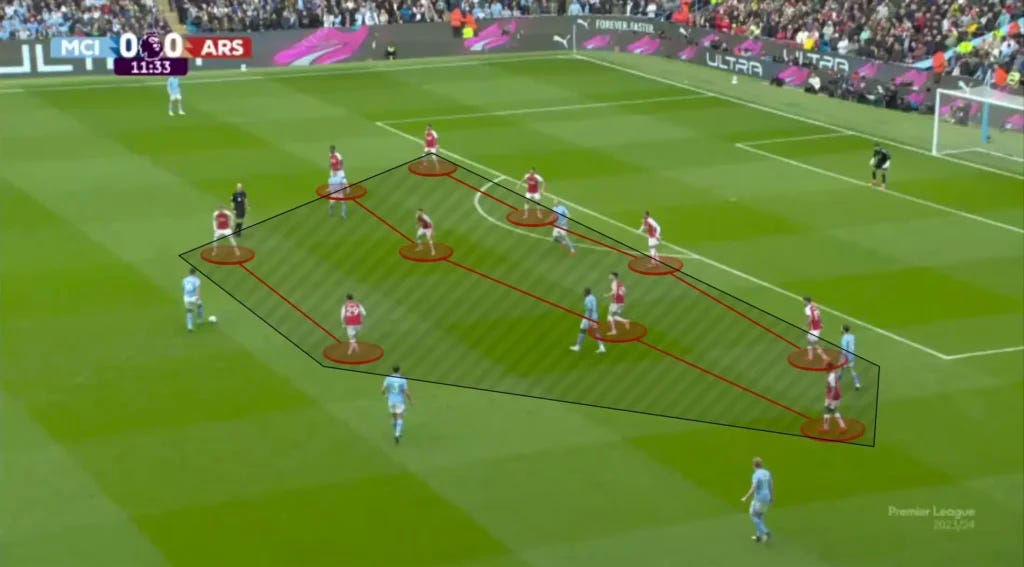
Since roughly 2010 this tactic has proliferated in response to the parallel and dogmatic rise of positional play. Positional play, to put it simply, is a term that has come to encapsulate the approach to football pioneered by Johan Cruyff in the 1970s. The approach views the game through the following phases:
Controlled attack
Attacking transition
Defensive transition
Controlled defense
Within each of these phases exist several principles and patterns that determine a players decision making and a team’s structure to achieve desired outcomes. These outcomes are almost always: (1) qualitative superiority—getting one of your individually better players against an inferior opponent (2) quantitative superiority—dominating a space of the field with more players than your opponent (3) positional superiority—occupying space more intelligently than your opponent leading to gaps and openings for your players.
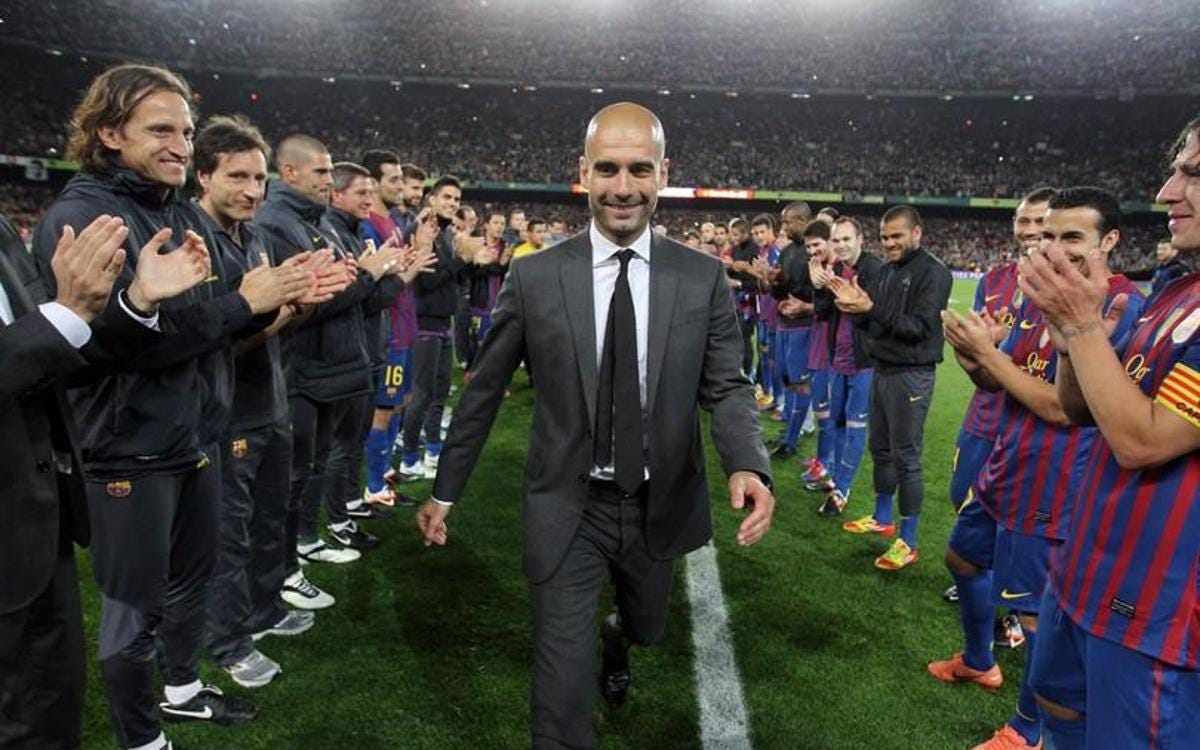
Now, this description of positional play is of course only surface level. The approach has countless nuances and variations depending on formation, emphasized principles, and styles of play. Nevertheless, the fundamental approach principles remain unchanged. The style has been brought to its current peak by Pep Guardiola. The greatest tactician to ever grace the game’s sidelines, and an inspiration for countless of today’s modern managers (Roberto De Zerbi, Mikel Arteta, Vincent Kompany, Enzo Maresca, Xabi Alonso). He has won the sextuple with Barcelona and the treble with Manchester City. Perhaps more importantly, his dominance on Europe’s biggest stage has changed the game across the globe. Go to any professional academy across the world and you will find under 8s passing out of the back and running an inverted fullback. Check your local Sunday league and you’ll probably catch the same.
The premise of positional play makes sense, control the ball and you control the game. You can’t get scored on and the result of each attack is a result of your actions, not the oppositions. On top of that, your team isn’t left chasing the ball around or sitting in their own half. The analytics team loves it because your percentage chance of winning goes up, and the manager loves it because they get as close as possible to running their teams as they would on Fifa - in control of every aspect of the game.
Positional play’s utter dominance of the sport is in alignment with every sports current race towards ultimate optimization. Its why every other NBA play is two guys in the corner, one in the dunker spot, and a high pick and roll to boot followed by a three from the team’s primary ball handler - the stats say you should. Yet, this optimization comes at a price. Just like when an undervalued investment is spotted, and the market buys it up, it ceases to be undervalued—positional play’s advantages may be null when everyone is doing it.
My main argument for positional plays current overvaluation is the following. Countless times in the past five years, I have watched teams utilizing a positional play approach, most notably Manchester City, come against an inferior side and proceed to pass the ball side-to-side around their low block for 90 minutes. The team resorts to desperation crosses into the box, wingers doing nothing but dribbling five yards and passing back, and most disgustingly, talented strikers touching the ball nine times throughout the entire game (one of which was kickoff).
The players know what they’re meant to do in each situation, they’ve been programmed to know. Whether they play an inverted fullback, inverted winger, or false nine they’re looking to create the aforementioned superiorities. The problem often is, the other team knows exactly what you’re looking to do, and they know you won’t dare risk to not do it - whether its a commitment to principles or fear of making a mistake.
Having achieved sustained possession in and around the opposition’s box, there are only a number of ways to break the low-block.
Win a one-on-one battle.
Whether its a broken tackle or a silky winger skipping his fullback, someone has to beat their man. When you’re optimized positionally and against a low block, beating one man breaks the system and opens opportunities—it’s that simple.
Play a killer pass.
This is De Bruyne, this is Fernandes. Whip it into an area only your striker can reach, turn a defender around with a line breaking pass, or cut it back to the second runner. It’s difficult to do, and its the reason the likes of Trent, KDB, and Bruno are so valuable.
Play a successful, line breaking combination of passes.
The most difficult of the three, this is the play that Iniesta, Messi, and Xavi could dazzle the world with. Its the pass that turns the defenders around, freezes them, or confuses them with the sheer intricacy of the combination that allows players to cut through lines and cut up the low-block from inside.
Break your own positional principles.
Examples include, hoofing it up to the big man (Harry Maguire against Lyon), having a shot from distance, sending your CB or DM into the box. Merely anything that breaks the monotony of such positional play can be the wildcard variation in approach that breaks the low-block.
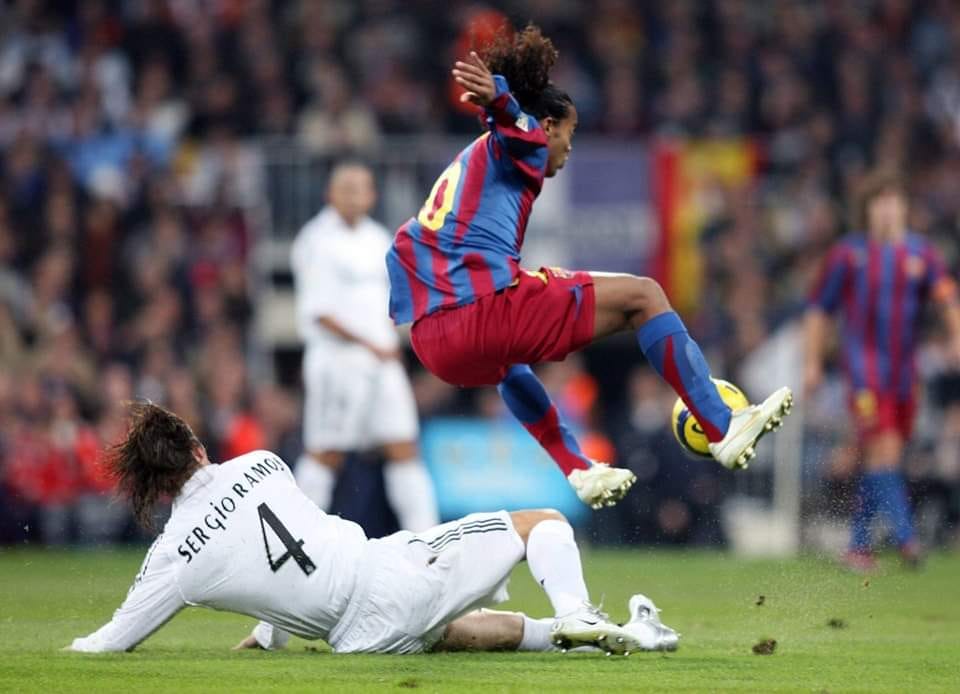
Too often managers coach such risk-taking measures out of players when they are precisely what wins games. Ronaldinho, Rooney, Neymar, Zidane. These weren’t players that optimized the game, they broke it. Today they may be subject to managers who take their flair away and break the excitement in their games. They may still have been phenomenal players and won trophies, but their essence could be gone.
I think PSG’s dominance over the past year is potentially the first glimpse into a new era of football that isn’t over-optimized. One that recognizes that ultimately the game is played by the players, not the managers. One that realizes the game is won by those with better skill, athleticism, and intelligence as the bedrock upon which their tactical approach can flourish—not the other way around.
Now, I don’t say this to bash on positional play. In fact, I’m one of the biggest proponents for the intellectual approach to the game that has brought it such sophistication and competition. Watching for tactical approaches and managerial brilliance is part of what keeps me coming back to the game. But ultimately, what brought me to the game as a child was not an inverted fullback, it was watching the natural brilliance of a player gliding across the pitch, a semi-telepathic linkup between teammates, and the combined emotions, community, and purpose that the game brings to life.
Like life the game evolves, I believe the time has come in which playing it safe, is the riskiest thing you can do.